
A few years ago while on vacation, I scheduled a massage at a nice resort. The description was so enticing that I could hardly wait for that day to arrive. The Vagus Nerve Meditative Massage claimed to be “calming while it activated the body’s relaxation response”. Unfortunately, the marketing was highly overrated for what I received, and the young therapist admitted that she never received any training on the technique whatsoever! She didn’t know where the vagus nerve was located, what it did, how to stimulate it or how to help calm it.
 Here’s what I learned…
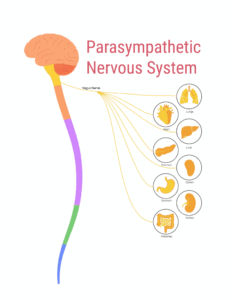
Known as the “wandering nerve”, the vagus nerve is one of the most important nerves in the body. Until recently, most people had never heard of it. Because of the growing awareness and understanding of trauma and its effect on the nervous system, this nerve has begun to receive the recognition it deserves. Beginning at the brain stem, the vagus nerve travels down through the neck, chest and abdomen – it literally affects every major organ, including the heart, lungs, and digestive tract.
The vagus nerve is a main component of the parasympathetic nervous system (also known as the “rest and digest” system). It plays three vital roles in your body’s ability to regulate your sense of being balanced and relaxed.
Its first role is to help regulate a person’s heart rate. Here, the vagus nerve helps to slow the heart rate and support cardiovascular balance. Second, the vagus nerve provides digestive support by signaling the stomach and intestines to move food efficiently. And as its third role it is responsible for promoting physical relaxation, reducing inflammation, and helping the body recover from stress.
How do you activate the benefits of the vagus nerve?
The parasympathetic nervous system can be activated by taking deep, slow breaths – especially while extending your exhale. This directly stimulates the vagal tone (activity level of the nerve). Humming or singing your favorite song(s), chanting, and even gargling will also stimulate and relax the nerve. Another easy way to help calm the vagal response is to alternate the application of a cool, wet compress with a warm one on both your face and neck.
The vagus nerve is always there, quietly orchestrating your internal balance. Medical massage therapists understand the anatomy of the nerve and have specialized techniques that can:
- Reduce physical tension in your neck, jaw and chest
- Address the muscles and organs associated with this nerve
- Enhance your ability to relax or calm down
- Improve digestion
- Improve the functioning of this nerve
Massage therapy can help your body tap into the incredible and positive influence that the vagus nerve has on your overall health and wellbeing.